 Español
 ایران

This post is also available in:
Joint Meeting of the Legal Committee of the Iran–Spain Joint Chamber of Commerce with the Madrid International Arbitration Centre (CIIAM)
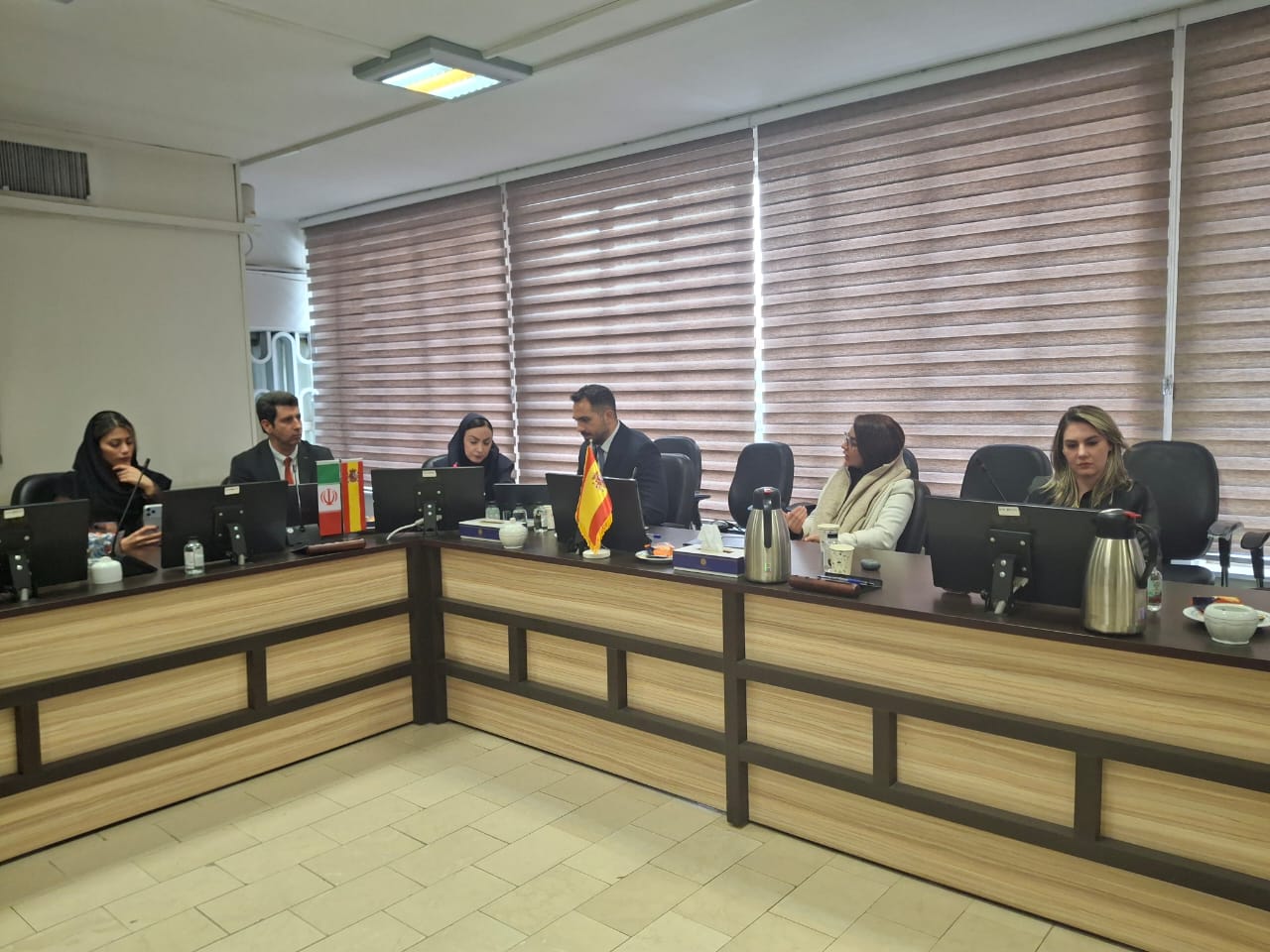
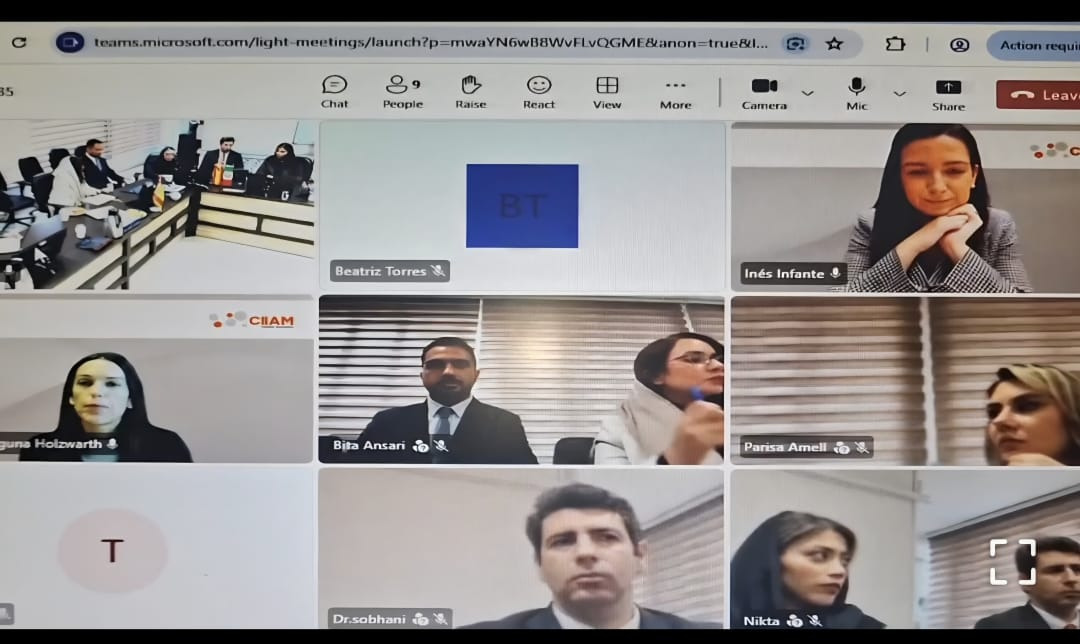
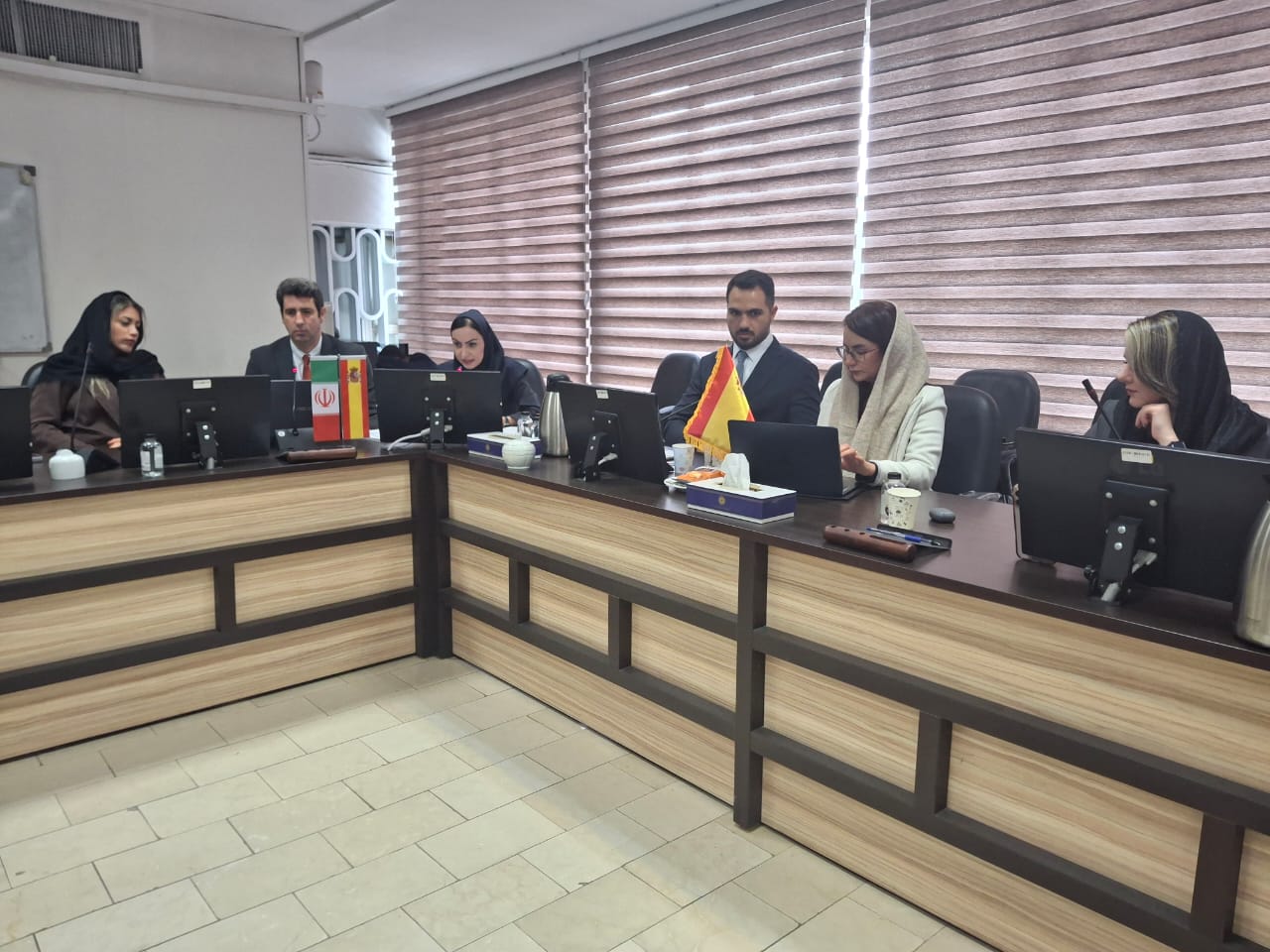
On Wednesday, 27 Aban 1405, corresponding to 18 November 2026, from 12:30 to 13:30 Tehran time, the Iran–Spain Joint Chamber of Commerce held an online Legal Committee meeting with CIIAM, the Madrid International Arbitration Centre (Centro Internacional de Arbitraje de Madrid). The meeting examined areas of legal, educational and professional cooperation in international commercial arbitration.
Participants in the Legal Committee meeting with CIIAM
Representatives of the Madrid International Arbitration Centre:
- Marta Lalaguna, Secretary General of the Centre
- Inés Infante, Legal Director
- Beatriz Torres Díaz, Coordinator of administrative and executive affairs
Representatives of the Iran–Spain Joint Chamber of Commerce:
- Dr. Mohammad Taheri, President of the Joint Chamber and Head of the Legal Committee
- Dr. Mohammadreza Sobhani, Secretary of the Legal Committee
- Bita Ansari, attorney-at-law and member of the Legal Committee
- Mehdi Gholami, member of the Legal Committee
- Parisa Amel, member of the Legal Committee
- Nikta Sadeghi, member of the Legal Committee
Discussions
At the start of the meeting, Dr. Mohammad Taheri, President of the Iran–Spain Joint Chamber of Commerce, welcomed the representatives of the Madrid International Arbitration Centre and introduced the Chamber’s missions and capacities. Referring to the role of the Chamber’s specialized committees in developing economic relations between the two countries, he emphasized the importance of economic operators having access to credible legal and arbitration mechanisms, and considered expanding relations with specialized international institutions effective in strengthening confidence and security in commercial relations.
Dr. Mohammadreza Sobhani, Secretary of the Legal Committee, then outlined the Committee’s structure and areas of activity, including legal advice, arbitration and mediation, research, and the organization of specialized events and workshops. Referring to the importance of properly drafting international contracts and of companies’ familiarity with arbitration rules, he explained that some Iranian economic operators, despite including a Madrid arbitration clause in their contracts, do not have sufficient knowledge of the steps for commencing proceedings and of the Centre’s mechanisms. He therefore identified the development of specialized contacts, the exchange of information, and the organization of joint educational programs as suitable areas for cooperation.
Dr. Sobhani also proposed establishing an ongoing relationship between the two institutions and examining the capacity for institutional cooperation, and referred to the Madrid Arbitration Centre’s experience of international activities.
Bita Ansari, attorney-at-law and member of the Legal Committee, speaking in Spanish, announced a plan to write a book in Persian on the structure, rules and functioning of the Madrid Arbitration Centre. She said the purpose of the work is to familiarize Iranian lawyers, legal advisers and economic operators with the Centre’s rules, the drafting of arbitration clauses, and the steps for bringing a claim. She also requested the cooperation of CIIAM experts in answering specialized questions and reviewing information relating to the Centre before the book is published. Holding an event to introduce the book and to further acquaint Iran’s legal and business community with the Madrid Arbitration Centre was among the other proposals raised.
Mehdi Gholami, a member of the Legal Committee, stressing the need to develop professional communications, proposed an exchange of specialized information on arbitration rules and procedures and the use of the Legal Committee’s capacity to expand CIIAM’s relations with Iranian legal institutions, including the Arbitration Centre of the Iran Chamber, bar associations and universities. He also proposed that the criteria for selecting arbitrators at the Madrid Arbitration Centre be made available to the Committee, so that the possibility of identifying and introducing qualified Iranian international arbitrators, in accordance with the Centre’s requirements, can be examined.
Marta Lalaguna, Secretary General of the Madrid International Arbitration Centre, then outlined CIIAM’s framework for professional cooperation and welcomed the examination of specific, actionable initiatives on a project basis. She referred to the Centre’s experience of cooperation with South Korea and considered areas such as holding joint events, exchanging information, cooperating in the holding of arbitration hearings, creating databases, and activities in specialized fields as topics that could be examined.
Regarding the proposal to hold a specialized event, the representatives of the Madrid Arbitration Centre announced their readiness to take part. They also welcomed, in relation to the project to write a book in Persian, the provision of relevant information and resources, answers to specialized questions about the Centre’s rules and functioning, and a review of content relating to CIIAM before publication.
In another part of the talks, the Secretary General of the Madrid Arbitration Centre proposed that a sample draft memorandum of understanding (MoU) be sent by the Centre to the Joint Chamber for review, so that after its provisions have been studied, suitable areas for starting cooperation can be identified and executive measures discussed.
Conclusions and outcomes of the meeting
At the end of the meeting, the following points were identified for follow-up on future cooperation:
- Memorandum of understanding: sending a sample draft memorandum from the Madrid Arbitration Centre for review by the Joint Chamber and for determining areas of cooperation.
- Joint events: pursuing the design and organization of educational and specialized programs in international commercial arbitration with the participation of CIIAM.
- Cooperation on the publication of a book in Persian: submitting specialized questions to the Centre’s experts, receiving the necessary information and resources, and coordinating a review of material relating to CIIAM before publication.
- Exchange of information and specialized consultation: developing professional communications in order to become better acquainted with the rules, procedures and functioning of the Madrid Arbitration Centre.
- Examination of other areas of cooperation: dialogue on possible cooperation in holding arbitration hearings, creating databases, and related specialized activities.
The meeting ended with an emphasis on the importance of continuing professional communications and pursuing specific, actionable plans. The proposal to send a draft memorandum of understanding from the Madrid Arbitration Centre, together with the welcome given to participation in specialized events and to scholarly and research cooperation, were among the most important outcomes of the discussion.
Secretariat of the Iran–Spain Joint Chamber of Commerce
