 Español
 ایران

This post is also available in:
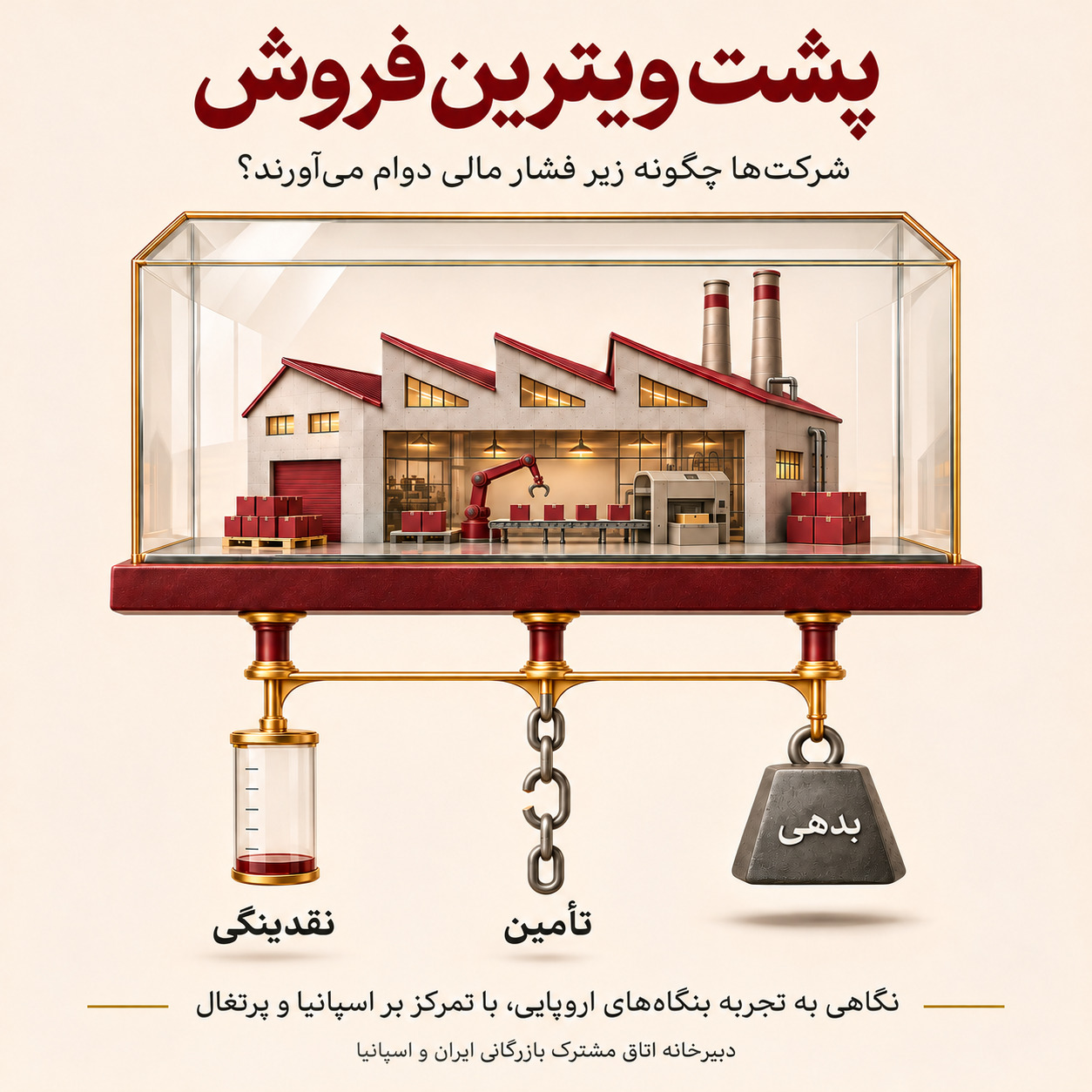
Behind the Sales Window: How European Firms Face Financial Pressure
A new order has arrived, the production line is running and talks with the next customer are moving ahead. From the outside, everything looks like growth. In the CFO’s office, though, another question comes up: where will the money to buy the materials for this order come from?
This imagined scene is familiar to many businesses. A company can sell, have customers and plan for expansion, yet still depend on collecting a single receivable to cover day-to-day costs. Between success in sales and the ability to keep operating lies a gap that does not show up in brochures or trade-fair stands.
Boston Consulting Group’s September 2026 report, The End of the Balance Sheet Safety Net, from the Transform and Special Situations Index 2026, offers a way to examine that gap. A study of more than 1,700 listed European companies highlights rising pressure on firms in Iberia, including Spain and Portugal; energy and industrials have been among the main drivers of transformation pressure in the region. The index is weighted by the revenue share of the companies reviewed, so its findings cannot be generalised to all Spanish firms or to their likelihood of bankruptcy.
For Iranian readers, the value of such a study lies in the mechanisms that strengthen or weaken a company’s ability to keep going. Different economic conditions, access to finance and trade environments limit any direct transfer of prescriptions. The core question, however, is shared: under pressure, how can a firm protect the resources and room for manoeuvre it needs for the next decision?
Shared pressure, different paths
The picture of European industries in the report is not uniform. In the sample, overall transformation pressure in real estate rose from 12% in 2025 to 62% in 2026. In automotive, the index stands at 42%, with more severe restructuring pressure at 28%. By contrast, overall transformation pressure in telecommunications, media and technology fell from 42% to 20%.
These differences show that resilience has to be assessed with each industry’s conditions in mind. Weak demand, tighter financing or structural change can put firms under pressure in different ways.
When orders grow, cash is tested
A stronger market does not always mean immediate relief. A new order creates costs before it creates income. Materials must be bought, staff paid and goods sometimes delivered long before the full price is collected.
Suppose a manufacturer sees orders rise. If customers pay later and suppliers demand cash sooner, growth will need more money. In that situation, even a contract that looks profitable in the accounts can create cash-flow pressure.
That is why looking at sales figures alone is not enough to understand a company’s position. The quality of sales also matters: how much has been collected, how many resources were used to fulfil the order, and when does the money return to the operating cycle? For the firm, the answers affect whether it can take the next order; for a trading partner, whether commitments will be met.
Pressure before it becomes visible
Financial vulnerability rarely appears all at once. First, some decisions are postponed: replacing a machine, hiring a specialist or developing a new product. Operations continue, but the range of choices shrinks.
Then an ordinary event has a larger effect. A late customer payment delays the purchase of materials; delayed purchases change the production plan; a changed production plan puts another customer’s commitment at risk.
In that situation, resilience can be seen in the company’s ability to contain the chain: how much disruption can it absorb, what resources does it have to recover, and how quickly does it see that the current plan needs to change?
BCG’s seven suggested actions for resilience
To face pressure, BCG proposes seven actions: strengthen revenues and pricing, review costs, innovate with measurable results, diversify suppliers, free up working capital, revisit the financial structure and use new opportunities carefully. The report also recommends a three-month cash forecast with weekly monitoring. These are management recommendations; the chamber note does not present evidence that Spanish companies have successfully applied all of them. Translating them into everyday business practice gives a clearer picture of resilience.
1. Build revenues that can withstand change. Sales volume is only one feature of revenue. Dependence on a single market, product or narrow group of customers also matters. Revisiting pricing, adapting products to customer needs and exploring alternative markets can reduce that dependence. A large customer’s share can make planning easier, but a cut in its purchases or a delay in payment will hit the whole business harder.
2. Scrutinise costs before pressure intensifies. Cost cutting works better when the source of waste is clear. The report suggests identifying three to five high-impact actions to protect margins. Focusing on a few specific fixes makes execution, ownership and follow-up easier. The side effects of savings must also be weighed: cutting equipment maintenance may raise the risk of breakdowns and shift a heavier burden into the future.
3. Demand measurable results from innovation. Technology investment needs a clear problem and a way to judge success, such as fewer inventory errors, shorter order-processing times or better control of waste. Technology, including artificial intelligence, supports resilience when its effect on productivity, competitiveness or growth is clear. Project costs go beyond software or equipment; preparing data, training staff and maintenance are part of the resources required.
4. Keep alternative paths in the supply chain. Relying on one supplier or one geography concentrates risk in a place the firm may not control. For a critical input, a list of vendors is not enough; the company needs to know which option can actually meet its needs. Having several vendors also does not always mean real diversification if they depend on the same producer or transport route.
5. Put trapped cash back into motion. Before looking for new finance, a firm can examine how money moves inside the business. Excess stock, slow-moving goods and overdue receivables each lock up liquidity. The aim is better coordination of purchasing, production, sales and collection. Purchase plans should match expected consumption, and sales terms should be weighed against the financial capacity to fulfil orders.
6. Match financial commitments to today’s capacity. A loan or obligation that was manageable when signed may create more pressure if financing costs rise or income flows change. The key question is how the company will meet its commitments if collections slip or refinancing becomes more expensive. Timing matters as much as amount. Even if expected income can cover obligations, several large payments concentrated in a short period can create strain.
7. Keep the capacity to see opportunity. Market changes can create new needs: customers looking for alternative suppliers, demand for a more affordable product, or room for cooperation and shared capacity. BCG also points to merger and acquisition opportunities in this area. A new order strengthens a firm only if fulfilling it does not disrupt the cash and capacity needed for existing commitments. Market appeal must be weighed against entry costs, the time to recover resources and the ability to deliver.
From firm resilience to lasting cooperation
These seven actions link a company’s self-knowledge to practical questions: how resources are used, when they return, which dependencies are critical and how changing conditions affect plans.
In cooperation between Iranian and Spanish firms, these questions matter to both sides. Knowing the market and the product is more complete when the counterpart’s ability to perform is also examined. In buying machinery, capacity to finish production, supply spare parts and continue after-sales service matters as much as technical specs. In selling goods, payment terms and the buyer’s record of meeting commitments also shape the outcome.
Pre-contract talks are a chance to clarify the same issues: what resources does fulfilment depend on, which stage is most likely to be delayed, how do payments match progress, and what mechanism exists for notice and plan changes if conditions shift?
Industry-wide information or a regional report does not replace assessing a specific company. Firms in the same market can differ sharply in financial structure, management quality and operating capacity. The value of such reports is that they prompt more precise questions and draw attention to parts of cooperation that early negotiations often overlook.
Lasting cooperation takes shape when both sides have a realistic picture of their own and each other’s capacities and commitments. That understanding can help set more suitable order volumes, delivery times and payment stages, and open the way for a gradual expansion of the relationship.
In a first meeting, the talk usually turns to the product, the price and market opportunities. The quality of the commercial relationship later also depends on the days when plans change: a shipment arrives late, a cost rises or a payment slips. Behind the sales window sits this set of decisions; decisions that show how ready a company is for whatever comes next.
Sources: Boston Consulting Group, “The End of the Balance Sheet Safety Net”, Transform and Special Situations Index 2026, published 28 September 2026; especially the section “Weathering the Storm: Seven Essential Actions”. Practical examples and explanations expand the report’s framework analytically and should not be read as an account of actions taken by all Spanish or Portuguese companies.
Prepared by the Secretariat of the Iran–Spain Joint Chamber of Commerce
