 Español
 ایران

This post is also available in:
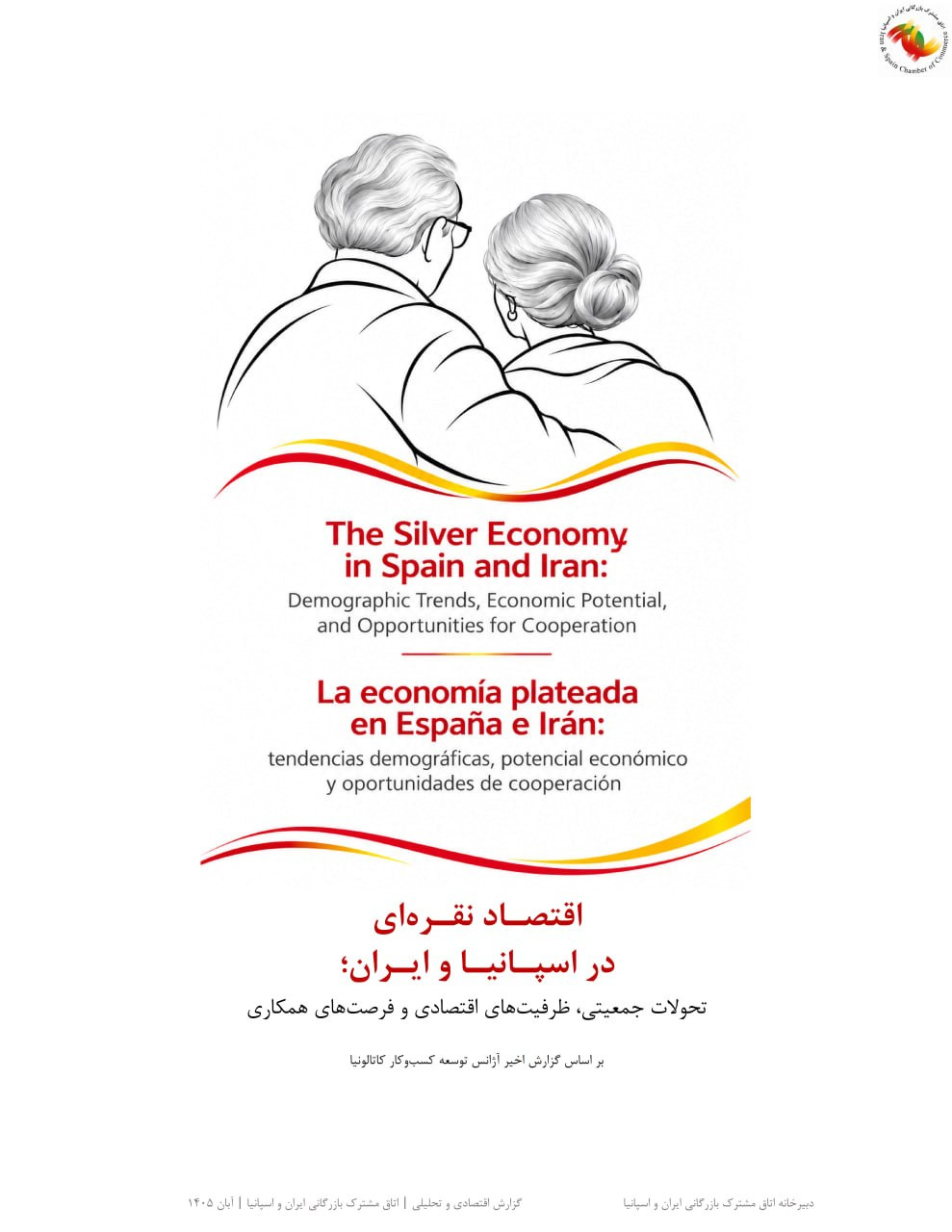
The Silver Economy in Spain and Iran: From Demographic Change to New Economic Opportunities
From smart homes and digital medicine to senior tourism: how longer lives are creating new markets and economic opportunities.
According to the latest report by Catalonia’s business development agency ACCIÓ, prepared with the WeMind Cluster and published on 4 November 2026, the silver economy in this Spanish region now includes 1,030 companies, generates €13.312 billion in revenue and employs more than 72,800 people. Over the past four years, the number of companies has grown by 46.5%, revenue by 36.4% and employment by 42.3%.
This overview looks at Catalonia’s silver-economy capacity, Iran’s population-ageing trend and possible areas of cooperation between Iranian and Spanish companies in health, technology, manufacturing and services.
From an ageing population to a new market
Rising life expectancy is often linked to concerns about pensions, healthcare costs and pressure on welfare systems. In Spain, the same demographic shift is shaping a market that goes beyond medical and home-care services into technology, tourism, housing, financial services and consumer-product design.
Customers of the silver economy are not necessarily patients or dependants. Many remain active, travel, shop, use technology and want more independence and a better quality of life. The Catalonia report identifies four main segments: health, care services, active ageing and well-being, and independence and quality of life.
Which segments matter most?
- Health — the largest economic segment: 293 companies generate nearly €6 billion, about 44% of the ecosystem’s revenue. Pharmaceuticals play a major role, while specialised nutrition, medical devices and therapeutic technologies are also growing.
- Care services — the largest employer: 36% of companies and 62% of jobs. Nursing homes and day centres remain important, while home care and personalised services are expanding.
- Independence and quality of life: about 14% of companies and revenue, covering hearing aids, mobility aids, telemedicine, remote monitoring and smart homes.
- Active ageing: the fastest-growing segment by company numbers, up about 63% since 2022, including senior tourism, leisure, financial services and digital tools for an active life.
Technology and investment in Barcelona
Around 300 companies in the ecosystem use technological solutions and account for more than 35% of revenue. Key technologies include artificial intelligence, digital health, medical devices, the Internet of Things and remote monitoring. Data protection, equipment costs, user training and keeping a human touch in care remain challenges.
Catalan silver-economy start-ups raised about $120 million in venture capital between 2016 and 2025, and Barcelona ranked first among EU innovation hubs for investment in this field in 2025.
ACCIÓ expects nearly one-third of Catalonia’s population to be 65 or older by 2070. People over 55 already make up more than one-third of the region’s population. Demographic change alone does not guarantee profits for every related business; purchasing power, social policy and access to technology also matter. Firms that adapt products and services to a longer-lived society are likely to find new openings.
Five Spanish companies worth watching
- Qida (Sabadell): home care with integrated software; serves more than 4,500 people a day and reported €38 million in revenue in 2025.
- Durcal (Barcelona): a smartwatch with fall detection, an emergency button, GPS and a 24-hour response centre.
- Bleta (Barcelona): tablets with a simple interface for older users; relevant for distribution and localisation.
- SeniorDomo: fall detection and emergency response technology.
- Cuideo (Barcelona): a digital home-care platform operating in more than 550 Spanish cities.
Being an exporter does not by itself mean a company is ready to work with the Iranian market; each case needs separate commercial, banking and regulatory review.
Iran and Spain: two stages of demographic change
Iran and Spain are at different stages of population ageing, but they share a question: how can longer lives go together with quality of life, personal independence and economic sustainability?
In Spain, more than one-fifth of the population is already 65 or older. Iran is still younger, yet falling fertility and rising longevity could reshape its age structure in the coming decades. According to UNFPA Iran, about 27.9% of Iran’s population is projected to be over 60 by 2050. Spain’s INE projects the share of people aged 65 and over to rise from 21.1% in 2026 to about 30.9% in 2076. These forecasts use different age groups and target years and should not be compared directly, but both point to a much larger older population.
Markets that could grow in Iran
- Digital health and remote monitoring: wearables and telemedicine; companies such as Durcal and SeniorDomo offer useful product and service models.
- Housing and home adaptation: safer flooring, bathroom equipment, motion sensors and alert systems.
- Simple, accessible technology: tablets, phones and software suited to vision, mobility and cognitive needs.
- Tourism and active-ageing lifestyles: flexible cultural travel, accessible accommodation and health tourism.
Mobility aids, digital products, care software, medical devices and senior tourism can form a practical Iran–Spain cooperation roadmap. Digital equipment and assisted-living products are relatively clear starting points for initial review, because products, manufacturers and distribution models are easier to identify.
An opportunity for Iranian manufacturers
The silver economy is not only about imports. Iranian producers in plastics, textiles, furniture, household equipment, electronics and medical devices can redesign existing products for older users: furniture at suitable heights, safer footwear, easy-open packaging and simple interfaces. This does not always require complex technology, but it does require a clear understanding of users and relevant standards.
The size of the older population alone does not create a profitable market; purchasing power, insurance cover, service infrastructure and technology access also decide outcomes. The main opportunity is to anticipate needs before they become mass markets. Spain’s experience can be a starting point for that foresight.
In the end, the silver economy asks a question that goes beyond age: how can we create better products, smarter services and more sustainable economic opportunities for a society that lives longer?
Main source: ACCIÓ and WeMind Cluster report on Catalonia’s silver economy, 4 November 2026; demographic projections from INE and UNFPA.
Secretariat of the Iran–Spain Joint Chamber of Commerce
