 Español
 ایران

This post is also available in:
Beyond the Will: A Madrid Session on the Future of Family Businesses
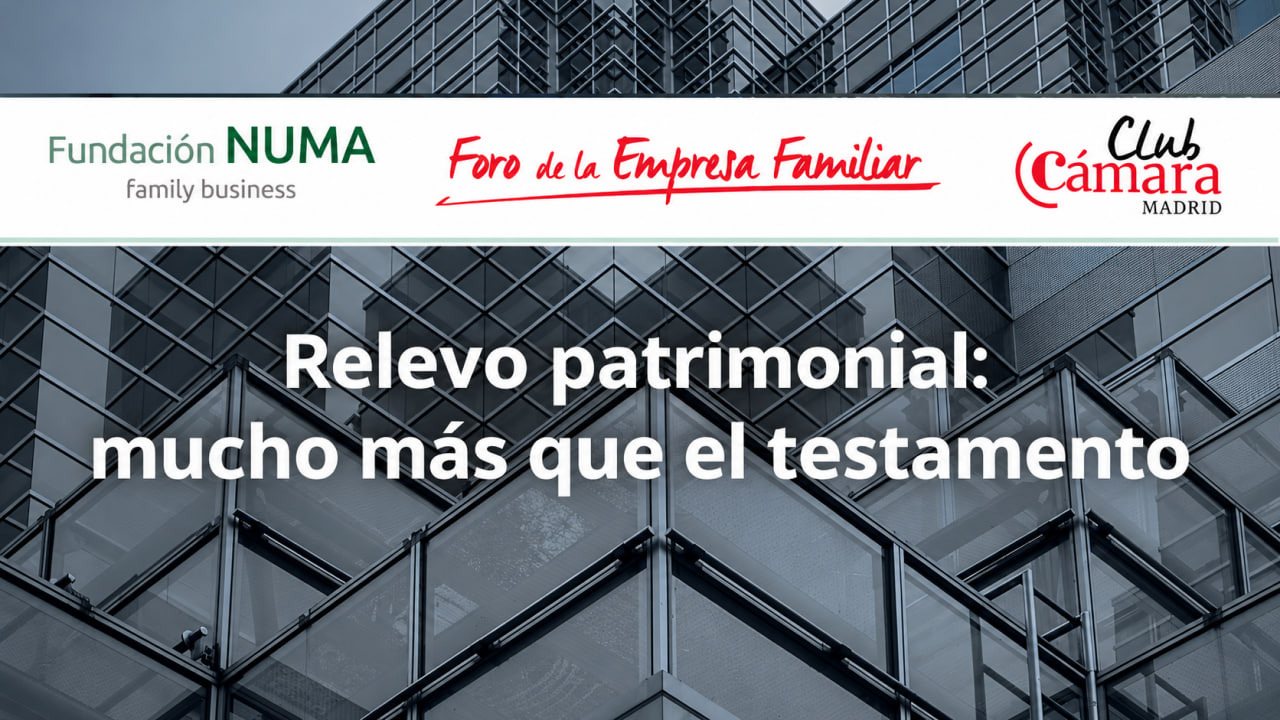
The specialised session “Wealth and Ownership Transfer: Much More Than a Will” (Relevo patrimonial: mucho más que el testamento) was held on Wednesday, 21 October 2026, from 09:30 to 12:30, by the Madrid Chamber of Commerce in cooperation with Fundación Numa. The Chamber is the public body that supports trade, industry, services and the internationalisation of businesses in the Madrid region. Fundación Numa is an independent non-profit that, since 2007, has worked on education, research and the promotion of models for intergenerational continuity in family firms.
The event took place within the Chamber’s Family Business Forum (Foro Empresa Familiar), a platform for exchanging experience and examining the management and ownership challenges of family companies. The session video was published on the Chamber’s official channel on 28 October 2026.
The speakers were José Ramón Sanz Pindó, president of Fundación Numa; Sigismundo Álvarez Royo-Villanova, a notary in Madrid and trustee of Fundación Hay Derecho; David Sardá, partner and head of wealth tax at BDO Abogados; and Pedro León y Francia, partner and head of family business at KPMG. The session examined the legal, tax and management dimensions of family business succession, how to prevent disputes among heirs, how to preserve family cohesion and how to keep firms going across generations.
Passing a family company from one generation to the next goes beyond transferring shares, assets and drafting a will. Separating ownership from management, naming a successor and clarifying the rights and duties of family members are among the key requirements. Disputes among heirs, a lack of dialogue and conflicting interests can put even long-established, successful businesses at risk. A family protocol, legal and tax planning, and transparent governance structures play an important part in preventing these problems.
The family business: more than an ownership structure
The session opened with José Ramón Sanz Pindó. Referring to the Chamber’s work in training, internationalisation and commercial arbitration, he stressed the need for institutional support for family firms, which he described as a main source of wealth creation, employment and social welfare.
He said about 89% of Spanish companies are family-owned, numbering around 1.148 million firms in 2025. He rejected the common idea that family businesses rarely survive beyond the third generation, arguing that many entrepreneurial families have adapted their structures and kept their economic activity going.
In his view, a family business rests on three linked parts: the family, the business activity and the family wealth. What makes continuity hard is not only a change of ownership, but how the relationships among these three evolve over time. As the family grows, interests diverge, and keeping a shared purpose across generations becomes essential.
Why a will is not enough
Sigismundo Álvarez Royo-Villanova explained that business owners often put off ownership-transfer planning. That is humanly understandable, because talk of succession is tied to retirement, incapacity or the founder’s death. Delaying those decisions, however, can carry a heavy cost for the company and the family.
He stressed that transferring a family firm’s wealth must be examined at once under company law, inheritance rules, tax regulations and management structure. A will is necessary, but it cannot answer every question on its own. Planning the transfer of ownership is part of owners’ responsibility towards the future of the business and the family.
When everyone owns, but one person must run the firm
A central theme was the relationship between ownership and management. In many family companies, shares are split among several relatives while day-to-day control sits with one person. That gap can breed conflict when the manager’s powers and other shareholders’ rights are unclear.
The answer is neither unlimited power for the manager nor shared executive decisions among all heirs. What is needed is a structure that combines effective management with oversight and protection of owners’ rights: a single manager, a board, clear powers and rules for appointing and removing directors. Succession is not only about death; sudden illness or incapacity can also disrupt the company, so management powers must be set out in the company’s own rules.
Disputes over profits and fairness among heirs
Without clear rules on managers’ pay and profit distribution, tension can grow between family managers and passive shareholders. Álvarez Royo-Villanova referred to “tunneling”, where company benefits may flow to those who control management. Setting clear rules in the articles and shareholder agreements before conflict arises is especially important.
On fairness among children, he noted that parents’ wish to divide assets equally often has more to do with family peace than with pure financial calculation. Yet when one child has spent years building the firm and others have not taken part, ownership decisions must respect legal rights while also allowing the business to continue. If unequal transfers are planned, explaining the reasons and seeking understanding can reduce later disputes.
The family protocol and separating assets
A family protocol can set rules on share transfers, family members’ entry into management, the choice of directors, dividend policy and dispute resolution. Asked about a Bosch-style model, Álvarez Royo-Villanova said a similar structure can be designed in Spain through a coordinated family protocol, shareholders’ agreement and articles of association. Providing for mediation before a crisis can also keep family disputes out of long court cases.
When planning succession, it is sometimes necessary to separate assets needed to run the business from other family assets, such as property and financial investments. There is no single formula; the right structure depends on each family’s legal, tax and economic situation.
The tax view and what participants feared most
David Sardá said succession planning should pursue several aims at once: the future shareholder mix, company management, non-operating assets, the economic security of the founder and spouse, and a sound tax structure. Ownership, management and assets are three different issues; transferring shares does not automatically mean handing over executive control.
He pointed to tools such as gifts or inheritance of shares, holding companies, shareholder agreements and a gradual handover of responsibilities. Tax considerations should serve the desired succession structure, not push families into rushed transfers.
In a poll of those present at the session, about 80% named family conflict or the breakdown of family relationships as the greatest risk, with inheritance-division issues next at about 65%. These figures reflect that audience only, not a national survey. Lack of dialogue, disagreement over how to divide assets and old resentments were among the main causes of conflict cited from personal and professional experience.
The future of the family business is built today
From different angles, the speakers reached the same conclusion: successful succession depends less on a single legal document than on planning, dialogue and a durable structure for the future. It must be clear who will run the business, how other owners’ rights will be respected, how assets will be transferred and how disputes will be resolved.
These issues also matter for Iranian family firms, especially those approaching a transfer of management or ownership to the second or third generation. The laws differ, but the need to plan before succession, separate ownership from management and preserve family cohesion is shared.
Spain’s main lesson is that the future of a family business must be designed before the moment of ownership and management transfer arrives. Continuity does not begin on the day ownership changes hands; it is the result of decisions founders and family members take years earlier.
Source: Specialised session “Relevo patrimonial: mucho más que el testamento”, Madrid Chamber of Commerce and Fundación Numa; video published on 28 October 2026
Secretariat of the Iran–Spain Joint Chamber of Commerce
